
Why Sustainability Will Fail in 2026 If No One Owns Execution


The Sustainability Problem No One Likes to Admit
By now, almost every organization has sustainability goals.
They are ambitious.
They are well-worded.
They look impressive in reports.
Yet as 2026 approaches, a difficult truth is becoming harder to ignore:
Most sustainability efforts won’t fail because organizations didn’t care enough. They’ll fail because no one owns what happens after the announcement.
Sustainability is not collapsing at the strategy level. It’s quietly breaking down at the operational level.
Execution Is Where Sustainability Goes to Disappear
Sustainability does not live in policies. It lives in daily decisions:
How energy is actually consumed
How maintenance is prioritized
How vendors operate when no one is watching
How waste is handled on ordinary workdays
How spaces adapt to changing usage
These decisions don’t sit with sustainability teams. They don’t sit with leadership statements.
They sit inside workplace operations and facilities.
And in most organizations, no one has formally acknowledged that shift yet.
The Quiet Role Shift Happening Right Now
Historically, facility teams were:
Support functions
Cost centers
Background operators
By 2026, that model breaks.
Facilities now directly influence:
Energy efficiency metrics
ESG audit outcomes
Employee experience and retention
Cost volatility and operational risk
Whether organizations realize it or not, Workplace Directors and Facility Partners are becoming sustainability owners by default. This is not a future trend.
It’s already happening - just without clarity or structure.
Why ESG Strategies Are Stalling on the Ground
Here’s the uncomfortable gap most organizations face:
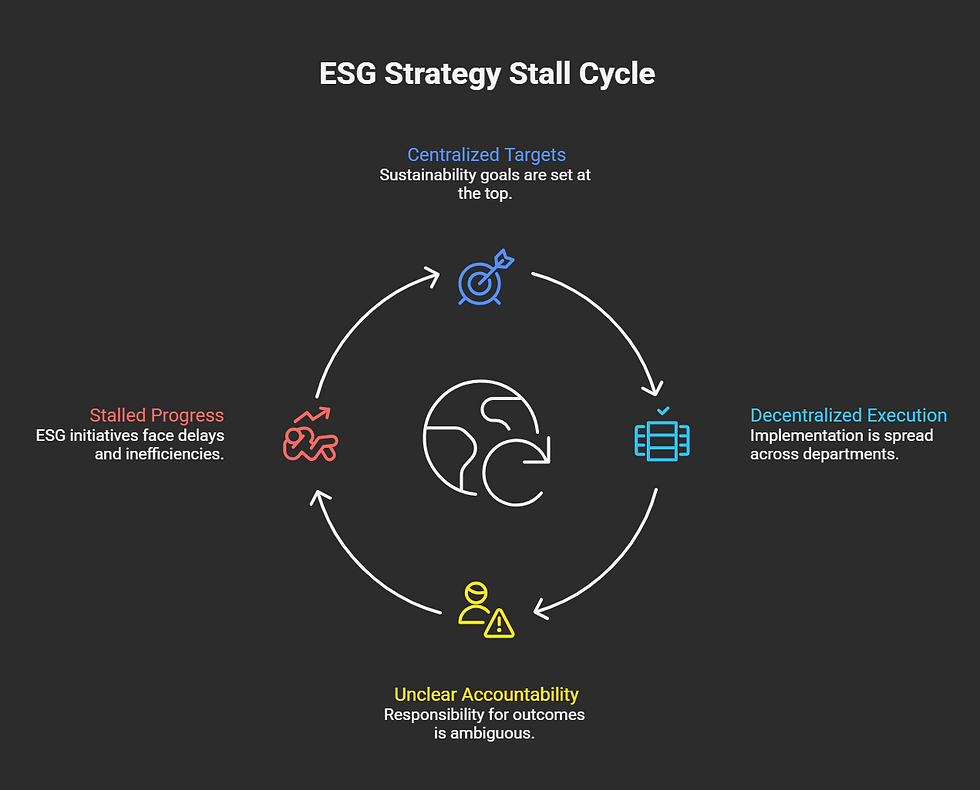
The result?
Policies without enforcement
Data without operational change
Partners without outcome ownership
Facilities sit at the intersection of infrastructure, people, and process yet they’re rarely empowered as sustainability leaders. That mismatch is where progress slows.
2026 Will Expose This Gap Ruthlessly
The next phase of sustainability won’t be forgiving.
By 2026:
Reporting will demand proof, not promises
Audits will examine operations, not intent
Employees will judge workplaces by experience, not claims
Inefficiency will show up directly in costs.
At that point, sustainability won’t be a branding conversation. It will be an operational credibility test.
Why Facility Partners Can No Longer Be “Just Vendors”
This is where expectations fundamentally change. Facility partners are no longer neutral executors. They influence:
Consistency
Compliance
Operational discipline
In other words, they sit directly inside sustainability outcomes. Organizations that continue to treat facility partners as transactional vendors will struggle to meet 2026 expectations.
Those that treat them as execution partners will move faster — and more credibly.
Where NexusPro’s View Is Different
At NexusPro Facility Services, we see sustainability as an execution process, not a messaging one. Our role as a workplace transformation partner is to:

Embed sustainability into daily operations
Build repeatable discipline, not one-time initiatives
Align systems, vendors, and people toward consistent outcomes
Because sustainability doesn’t fail loudly. It fails quietly through inconsistency.
The Real Question for Leaders Heading Into 2026
The most important sustainability question is no longer:
“What are our targets?”
It’s:
“Who owns execution when no one is presenting slides?”
By 2026, organizations that answer that question clearly will lead. Those that don’t will keep explaining gaps.
Conclusion
Sustainability will not be won through ambition alone.
It will be won through ownership - operational, visible, and consistent.
Facilities are no longer in the background.
They are where sustainability either works or fails.


Comments